.png)

.jpg)
Influencer marketing has become a core strategy for Canadian brands looking to build authentic connections. But organic reach has its limits. That’s where influencer whitelisting steps in, blending creator trust with paid media scale.
In this guide, we’ll break down what whitelisting is, how it works, and why it’s a game-changer for Canadian marketers. You’ll learn how to implement it effectively, stay compliant with Canadian ad regulations, and unlock stronger performance from your influencer campaigns.
What Is Influencer Whitelisting?
Whitelisting (also called creator licensing) is when an influencer grants a brand permission to run paid ads through their social media account. This means your brand can:
- Run ads that appear to come directly from the influencer's handle
- Use the influencer’s authentic content for extended promotion
- Gain full control over ad targeting, spend, and optimization
Unlike a traditional branded ad, whitelisted content blends seamlessly into feeds, leveraging the trust and voice of the creator, while giving advertisers paid amplification tools.
Why Whitelisting Matters for Canadian Brands
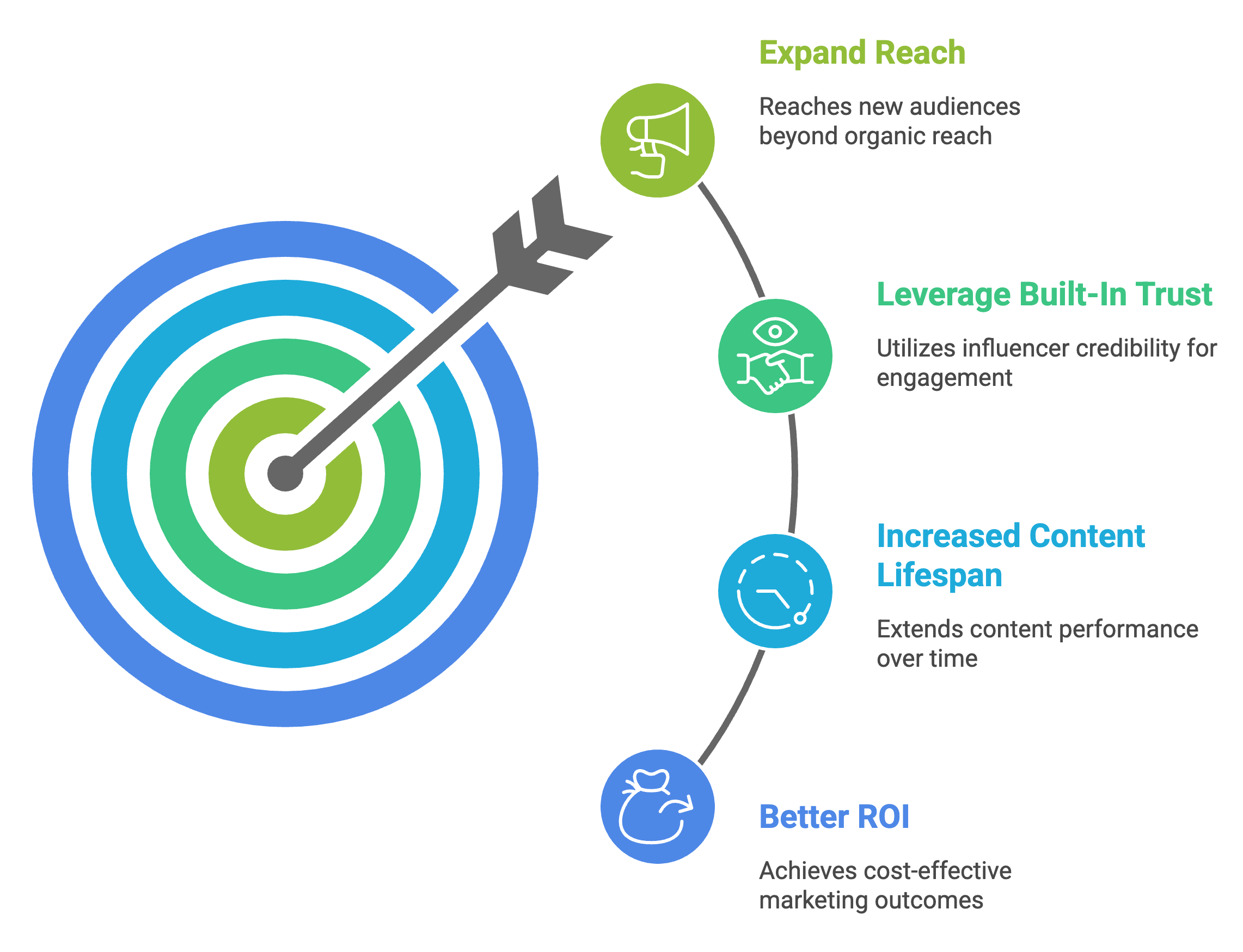
1. Expand Reach Beyond Your Own Followers
Whitelisting lets you go beyond your page’s organic reach. With paid support, you can:
- Reach lookalike audiences based on an influencer’s followers
- Use interest, geographic, and behavioural targeting
- Appear in feeds of new, relevant users without starting from scratch
2. Leverage Built-In Trust
Ads coming from an influencer’s handle feel more like recommendations than promotions. This helps:
- Bypass ad fatigue and banner blindness
- Drive stronger engagement and click-through rates
- Build brand affinity using the influencer’s credibility
Whitelisted ads typically outperform traditional ads thanks to this "borrowed trust."
3. Increase Content Lifespan
Influencer content is usually short-lived. A Story disappears in 24 hours. A Reel loses momentum in 48. But whitelisting allows brands to:
- Extend content performance over weeks or months
- Boost high-performing posts continuously
- A/B test content, tweak CTAs, and optimize for conversions
This turns time-sensitive content into an evergreen asset.
4. Drive Better ROI
Data shows that whitelisted ads can cut Cost Per Action (CPA) by 20–40%, while improving metrics like:
- Click-through rate (CTR)
- Watch time
- Conversion rate
For Canadian marketers working within tight budgets, these efficiency gains are hard to ignore.
Whitelisting vs. Boosting vs. Dark Posting
Not all influencer ads are created equal. Here’s a quick breakdown of how whitelisting compares to other methods:
Strategy What It Is Key Advantage Limitations
Whitelisting Brand runs ads from influencer’s handle High trust, scalable targeting Requires access setup
Boosting Brand promotes influencer’s post to their audience Easy setup Limited targeting & control
Dark Posting Unpublished post using influencer’s handle, not shown on their feed Full creative control Less visible, lower authenticity
Whitelisting sits in the sweet spot: authentic, trusted content with scalable performance.
How to Set Up Whitelisting: A Step-by-Step Guide
Phase 1: Planning and Influencer Selection
- Set clear goals: awareness, conversions, or retargeting?
- Find the right creators: Look for alignment with your brand, audience, and voice.
- Ensure technical compatibility: Influencers must have a business or creator account to enable whitelisting permissions on Meta or TikTok.
Pro tip: Start with organic content to test creator fit before scaling into whitelisting.
Phase 2: Permission and Contracting
- Negotiate usage rights in advance (duration, platforms, content edits)
- Add a whitelisting clause in contracts
- Discuss compensation: flat fees, rev-share, or hybrid models
Here’s an example clause:
The Creator grants permission to use their social media accounts for advertising purposes ('whitelisting') from [start date] to [end date]. This includes content promotion and ad creation. The Creator will receive [compensation details].
Phase 3: Technical Setup (Meta Example)
For Meta (Facebook/Instagram), the setup includes:
Brand-side:
- Create or log in to your Meta Business Manager
- Add the influencer’s handle to your account
- Assign ad permissions (Create Ads only)
Influencer-side:
- Use Meta Business Suite
- Add the brand’s Business Manager ID as a partner
- Assign access to the right assets
Tip: Use tools like Embold to simplify permissions or offer guided support.
Phase 4: Content Selection and Optimization
- Choose top-performing organic content or co-create ad-specific assets
- Make light edits (captions, CTA buttons) while preserving the creator’s voice
- Run A/B tests to optimize performance
Remember, UGC-style content often outperforms polished brand videos.
Beyond amplification, agencies can also outsource full influencer campaign execution through white-label partnerships. See our Complete Guide to White-Label Influencer Marketing for Canadian Agencies.
Canadian Compliance: What You Need to Know
Canadian brands are responsible for legal compliance, not just the influencers.
Disclosure Rules (Ad Standards & Competition Bureau)
- Clearly disclose any material connection (payment, product, trips, etc.)
- Use approved hashtags like: #ad, #sponsored, #brandpartner
- Avoid ambiguous tags like #collab or #promo
- Disclosures must be clear, visible, and device-friendly
- Video content may require audio + visual disclosure
Misleading Claims
- Influencers must only endorse products they have used or genuinely support
- Brands must verify that all claims are truthful and substantiated
- AI-generated influencer content must include disclosures indicating non-human nature
Bottom line: The brand bears the risk. Clear contracts, creator education, and active monitoring are critical.
Want a deeper dive into the legal guidelines? Check out our blog: Influencer Marketing Compliance in Canada: Rules, Best Practices, and Key Considerations
Whitelisting Best Practices for Canadian Brands
- Start with strong influencer-brand alignment
- Use UGC-style, scroll-stopping creative
- Set clear expectations in contracts
- Monitor performance continuously
- Optimize based on real data, not vanity metrics
- Keep legal and disclosure practices airtight
- Build long-term creator partnerships, not just one-offs
Why Canadian Brands Choose Embold
At Embold, we help Canadian businesses unlock the full power of influencer whitelisting, without the guesswork.
With over 9,000 vetted Canadian creators, end-to-end campaign services, and compliance built in, we make whitelisting easy, effective, and scalable.
We handle:
- Influencer selection and contracting
- Setup and permissions
- Content strategy and approvals
- Paid media optimization and reporting
Whether you’re running your first test or scaling nationally, we help you turn creator content into high-performing paid media.
Ready to Scale with Whitelisting?
Influencer whitelisting is one of the most efficient, trustworthy, and scalable ways to reach your audience in today’s digital landscape especially when executed with the right strategy and partners.
If you’re a Canadian brand looking to scale your influencer marketing, get in touch with Embold today. We’ll help you turn trusted voices into measurable growth.
Related articles


Ready to run a better creator program?
Tell us about your brand and what you're trying to achieve. We'll come back with a program structure that fits.